For the first time ever, a Czech scientist wins the international Dream Chemistry Award
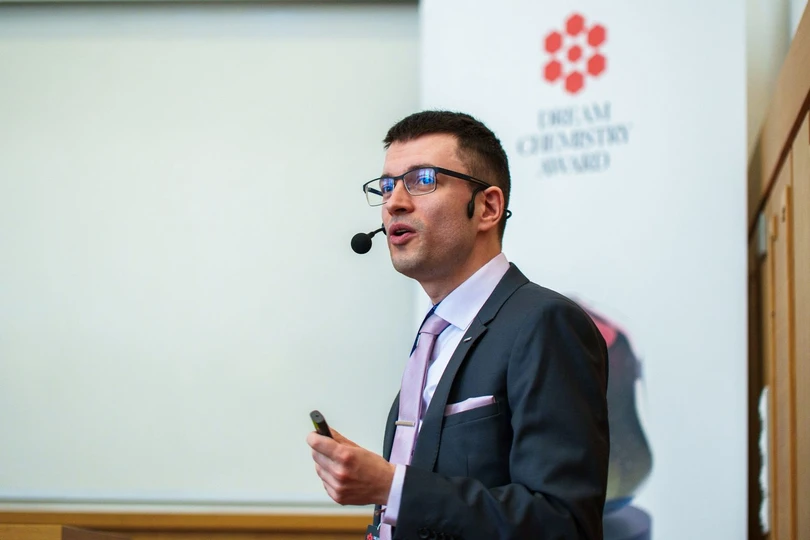
Ideas bold enough to push the limits of human imagination lie at the heart of the Dream Chemistry Award – a joint initiative of the Institute of Organic Chemistry and Biochemistry of the Czech Academy of Sciences (IOCB Prague) and the Institute of Physical Chemistry of the Polish Academy of Sciences (IChF PAS). Success in this prestigious competition is not measured by publication counts or impact factors; instead, proposals are judged by an international scientific committee for their originality, vision, and potential to redefine the field. This year, for the first time in the award’s history, the top prize goes to a scientist from the Czech Republic: Dr. Vít Svoboda of the Department of Physical Chemistry at the University of Chemistry and Technology in Prague (UCT Prague).
Vít Svoboda – also the first Czech researcher ever to reach the final top five – entered the competition with a concept for using chiral (mirror-asymmetric) molecules to build ultrafast quantum computers. Instead of electricity and silicon, such devices would rely on light, quantum physics, and the distinct behavior of “left-handed” and “right-handed” molecules. His proposal outlines an entirely new computational paradigm that combines molecular structure, electron spin, light, and ultrafast optics. “I shaped the project in part for the Dream Chemistry Award, but it is rooted in ideas I’ve been developing for a long time,” says Svoboda. “The nomination motivated me to refine and expand these concepts into a cohesive and ambitious proposal. Preparing for the competition helped me crystallize a direction I now hope to explore much more systematically in my future research.”
The Dream Chemistry Award is open to scientists within seven years of earning their PhD. Its mission is to encourage early-career researchers not to give up on bold visions in chemistry and related fields. The competition seeks unconventional solutions to problems with global impact – projects that, if successful, could have meaningful benefits for society. Candidates are nominated by distinguished senior researchers from leading scientific institutions around the world. Once nominees accept and submit their proposals, the projects undergo evaluation by an international scientific committee. Prof. Pavel Jungwirth of IOCB Prague, who has been part of the competition since the beginning of the Czech-Polish collaboration, explains: “If you want to succeed, you have to present a chemistry project that makes you think: This is a dream – and it just might work. Past winners came from some of the world’s top universities, such as Oxford, Cambridge, and Harvard. This is the first year a Czech scientist from a local university has won, and I see that as a very promising sign that our science is becoming truly world-class.”
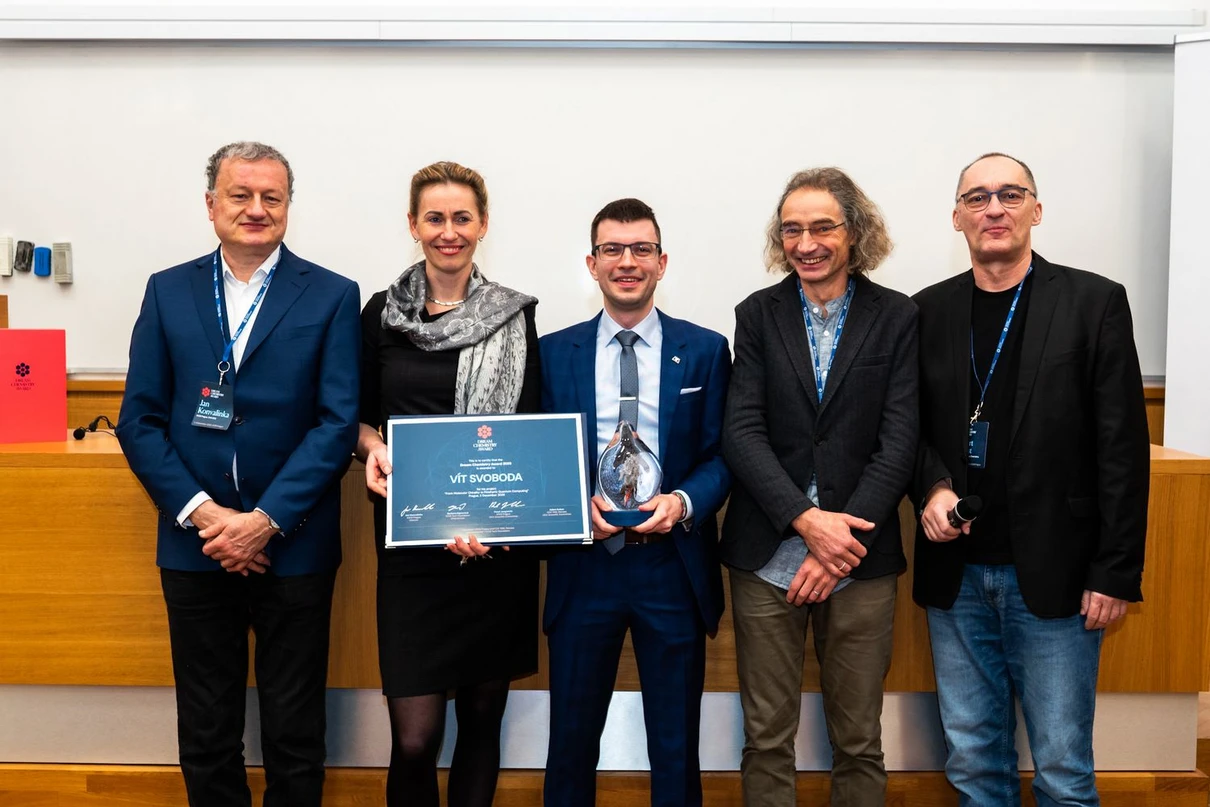
The Dream Chemistry Award includes a bespoke glass sculpture and, thanks to the event’s main sponsor, the IOCB Tech Foundation, a cash prize of €10,000. The remaining finalists receive the TOP 5 Prize along with €1,000.
Prof. Jan Konvalinka, director of IOCB Prague and host of this year’s edition, highlights what makes the competition unique: “Most scientific prizes are awarded in recognition of what researchers have already achieved. This award celebrates plans and dreams. It recognizes scientists who present the boldest yet still realistic ideas. Without courage, you simply can’t do great science.”
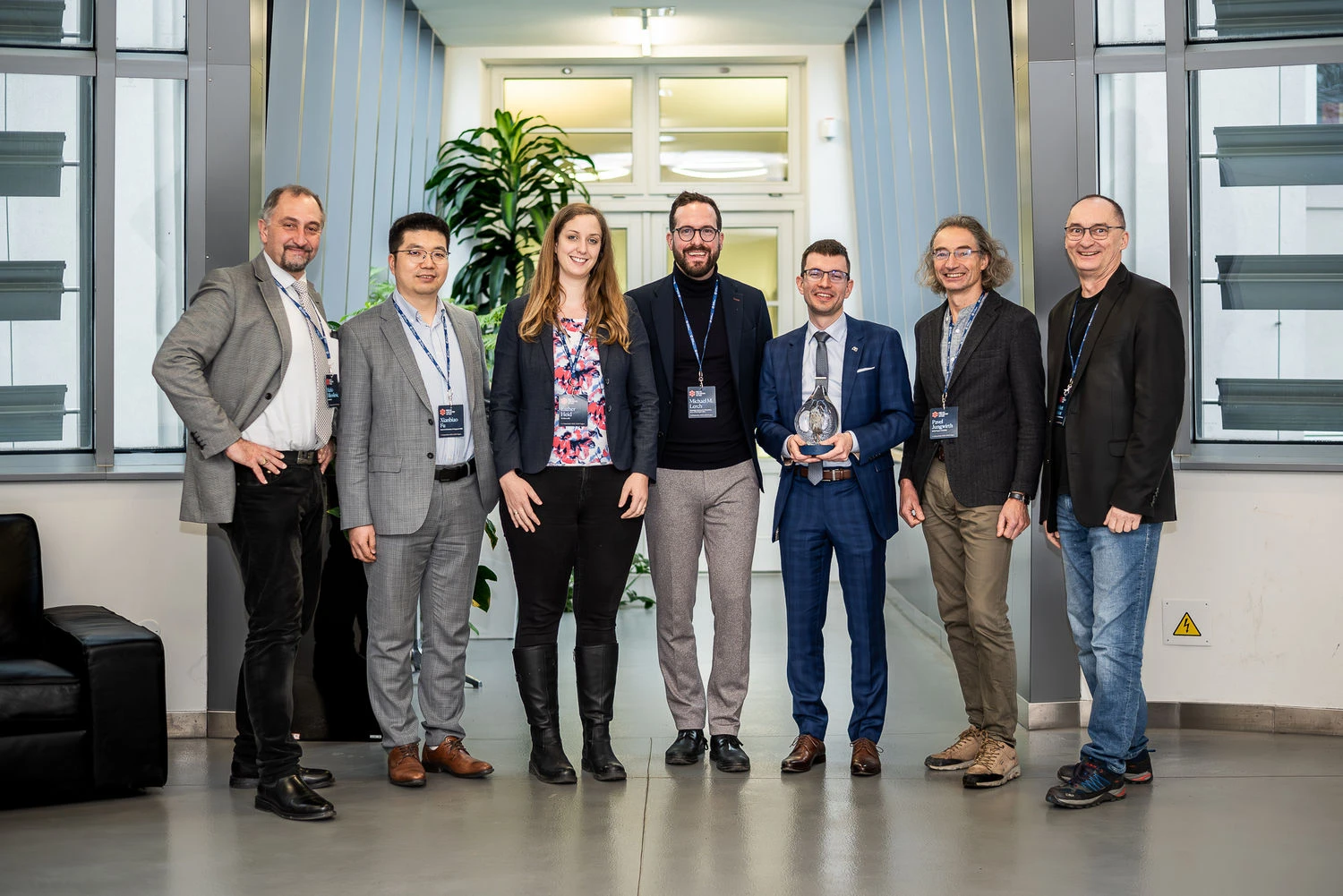
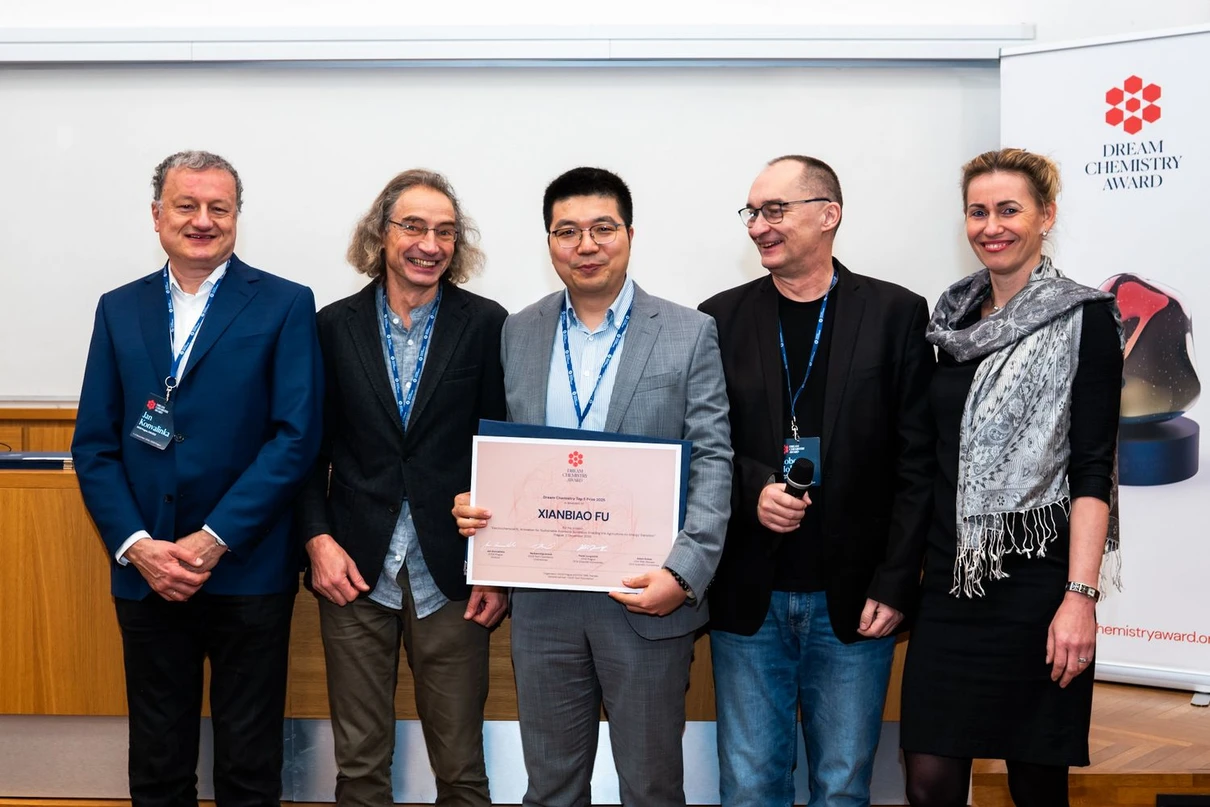
- Dr. Xianbiao Fu (National University of Singapore), who proposed a more sustainable method for producing ammonia – critical for fertilizers and a potential zero-emission energy carrier. His concept could support more intensive agriculture in poorer and remote regions while significantly reducing industrial CO₂ emissions.
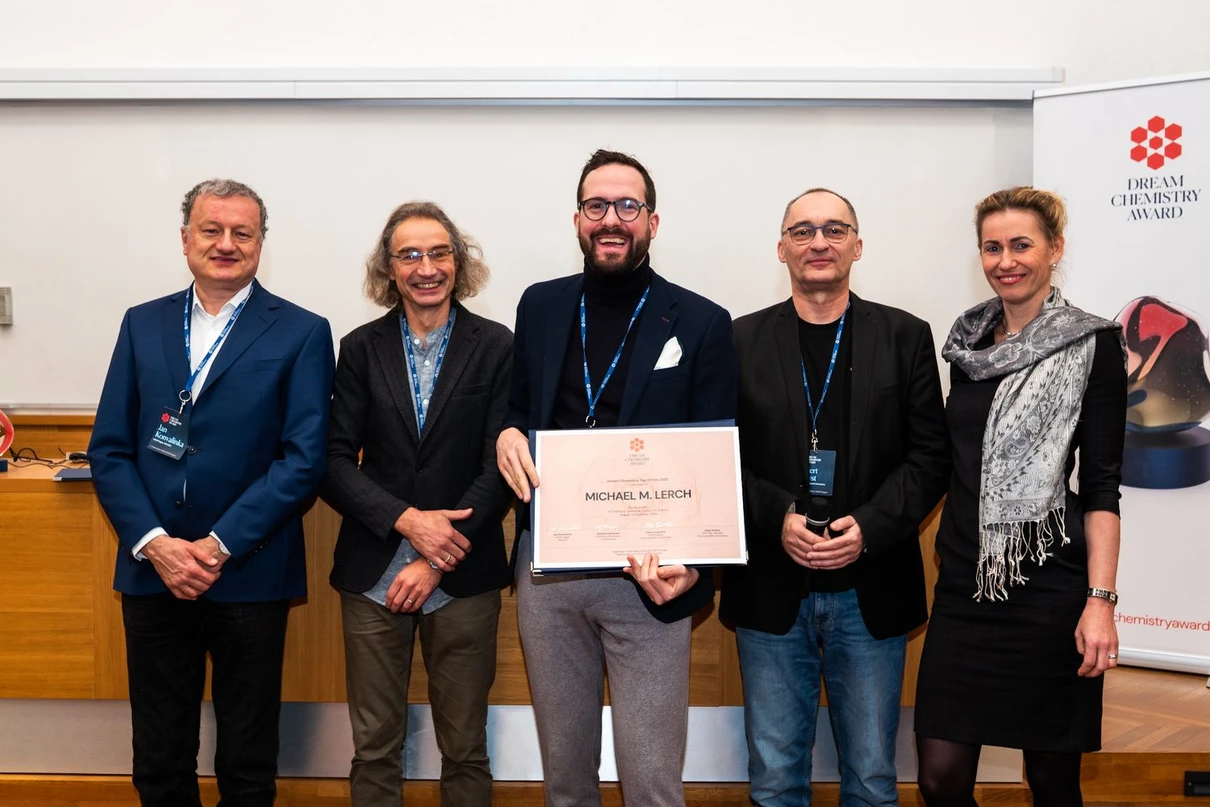
- Dr. Michael M. Lerch (University of Groningen, Netherlands), whose research in synthetic organic and materials chemistry inspired a vision for robots that learn and move like humans – powered not by electronics but by chemistry. Potential applications include touch-sensitive robotic hands, prosthetics that grow and adapt to the body, and soft robots for medical, rehabilitation, or home-care use.
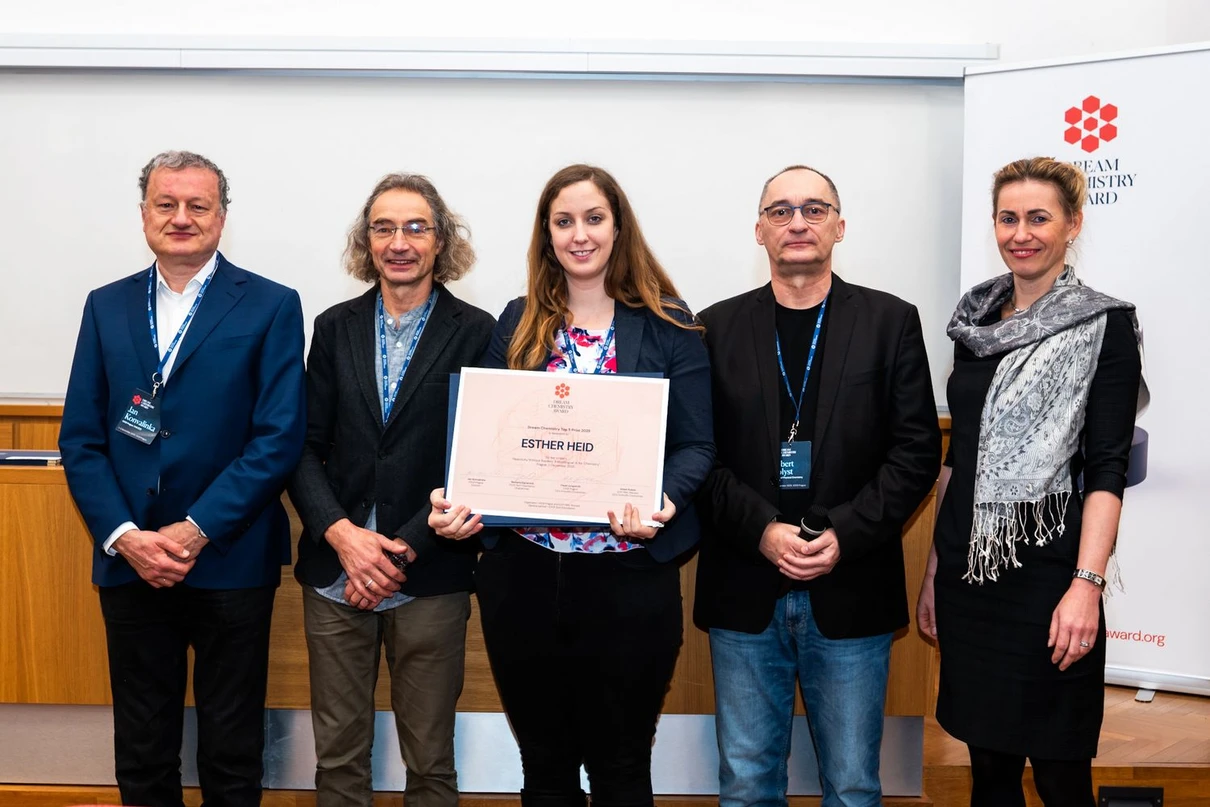
- Dr. Esther Heid (TU Wien), who aims to harness artificial intelligence to create a universal translator for chemical reactions – similar to language-translation apps. Such a tool could suggest alternative reactions that avoid expensive metals, opening the door to greener and more accessible synthesis methods for smaller laboratories.
- Dr. Muhammad Jbara (School of Chemistry, Tel Aviv University), who proposed designing synthetic peptides and mini-proteins that bind DNA and silence cancer-causing genes. This approach could lead to a new class of personalized cancer therapies that directly switch off harmful genes, complementing or even replacing conventional chemotherapy.
The Dream Chemistry Award was founded ten years ago by Prof. Robert Hołyst of IChF PAS. IOCB Prague joined as co-organizer in 2017, and since then the event has taken place annually, alternating between Prague and Warsaw.