Two researchers from IOCB Prague have won awards in Česká hlava, a national science awards programme organized jointly with the Office of the Czech Government. Tomáš Pluskal received the ABB INVENCE Award for developing computational tools to analyze mass spectrometry data. Robin Kryštůfek received the IDEA StatiCa DOCTORANDUS Award in Engineering Sciences for automating peptide synthesis and testing.
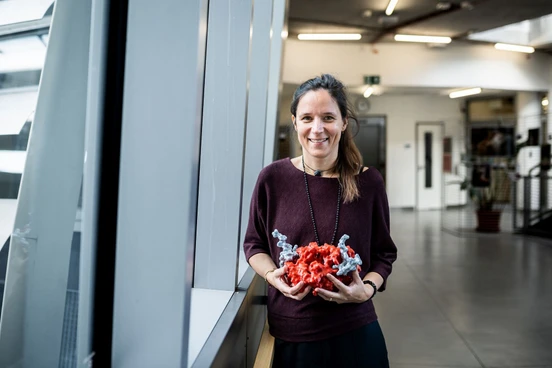
Tomáš Pluskal joined IOCB Prague in 2020 and leads the Biochemistry of Plant Specialized Metabolites group. Before joining the institute, he spent 15 years abroad at the Okinawa Institute of Science and Technology (OIST) and the Whitehead Institute for Biomedical Research. He received the 2024 Neuron Award for Promising Young Scientists in Chemistry.
He develops computational tools that use artificial intelligence to analyze mass spectrometry data and identify molecules in samples. “Nature holds a vast number of undiscovered compounds with medicinal or other useful properties, but characterizing them using traditional methods is painstaking and time-consuming. I would like to help explore the world of natural products more efficiently and inspire our medicinal chemists to pursue new discoveries and approaches,” he says.
His team’s work includes mzmine, a software package used worldwide, and DreaMS, an AI model that learns from millions of mass spectra to recognize patterns. These tools could accelerate the discovery of previously unknown natural products, molecules with potential for drug development, and disease biomarkers. They could also help detect harmful substances in food and the environment.
Hundreds of peptides in a single instrument
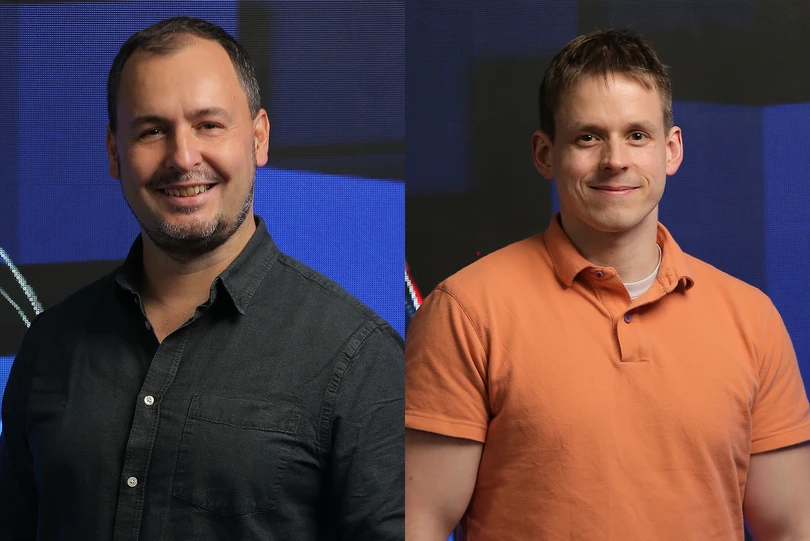
Robin Kryštůfek worked in Jan Konvalinka’s group at IOCB Prague until September 2025, having joined while still in secondary school. He now works at the biotechnology company Genentech in the United States. He received the Česká hlavička award in 2013 and the Josef Hlávka Award in 2025. He also won Werner von Siemens Awards for both his master’s thesis and his doctoral dissertation.
He develops technologies that make peptide synthesis and testing faster and more affordable. He designed and built SPENSER, an automated instrument that can synthesize hundreds of different peptides simultaneously using very small amounts of material. “When looking for new biologically active molecules, we often need to synthesize and test hundreds of variants. This used to be labor-intensive and costly, particularly when working with expensive or non-standard amino acids,” he explains.
Combining peptide synthesis with biological testing allows researchers to quickly identify molecules with the properties they are looking for. The platform has already helped identify compounds that inhibit an enzyme in a disease-causing yeast. It has also contributed to studies of potential targets for antiviral drugs and processes involved in the origins of life.