


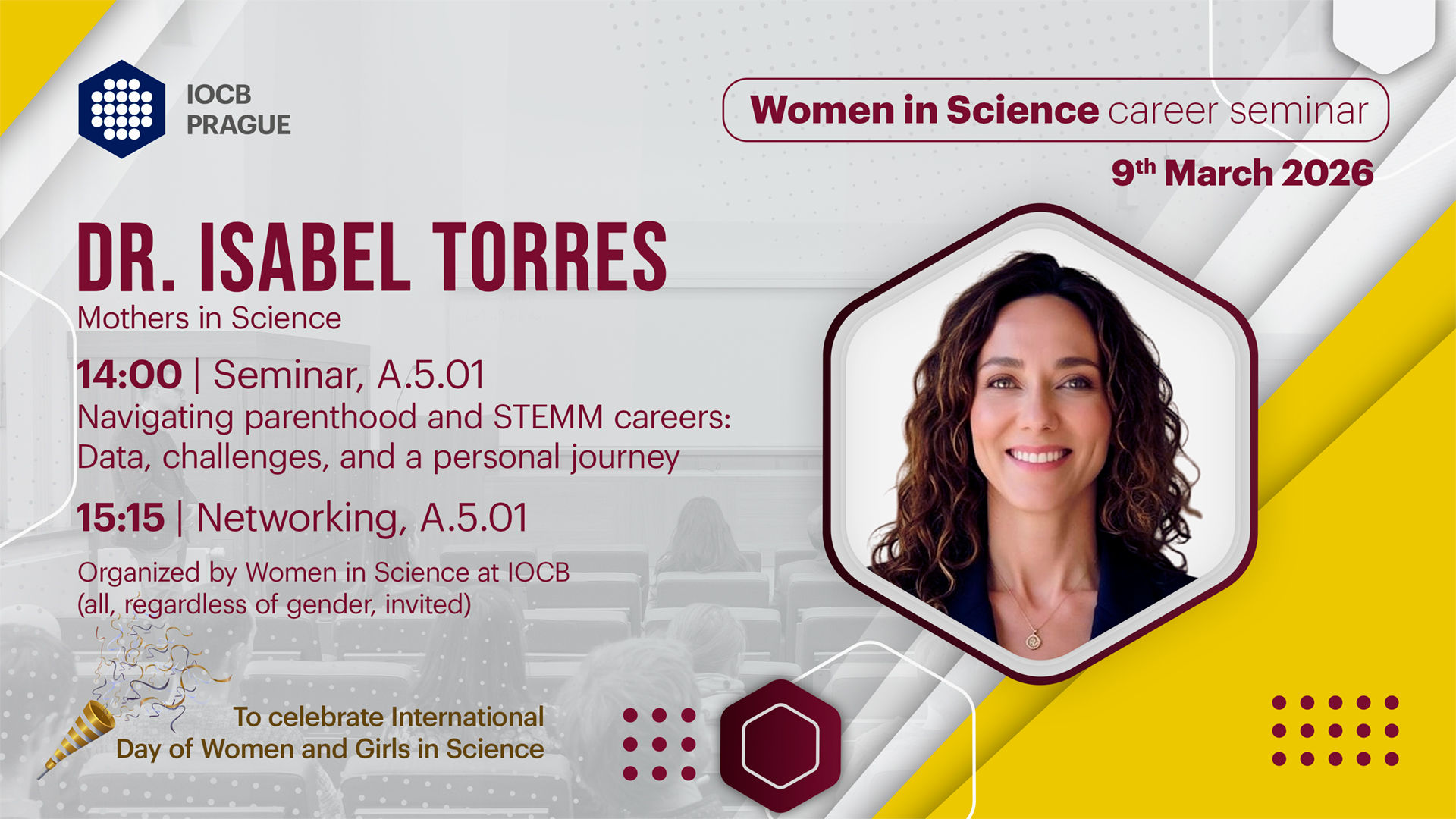
Speaker
Program
9. 3., 2 p.m. Seminar: Navigating parenthood and STEMM careers: Data, challenges, and a personal journey (A.5.01)
9. 3., 3:15 p.m. Networking (A.5.01)
Series
Abstract
More women than ever before are pursuing careers in STEMM (science, technology, engineering, maths and medicine), yet they remain vastly underrepresented, particularly in leadership positions. A study conducted in the US shows that 43% of mothers and 15% of new fathers leave full-time employment within 3 years of having children, and research by Mothers in Science further revealed that these alarming trends are global. Dr Isabel Torres will discuss the invisible barriers that hinder the career advancement of caregivers, and especially mothers, and explain why caregiving should be at the center of discussions and interventions to close the gender gap in STEM. She will show data from a global survey with about 9,000 respondents (mothers, fathers and non-parents) in over 128 countries conducted by Mothers in Science to study the impact of parenthood on career progression in STEMM. These findings reveal that parents face multiple structural barriers and widespread stigma in the STEMM sector with significant penalties on their career advancement and academic success, and mothers are disproportionately affected. Dr Torres will also share her personal journey navigating academia, transitioning across STEMM careers, and founding the nonprofit Mothers in Science, while being a solo mother of four children.
Bio
Dr Isabel Torres is the co-founder and CEO of Mothers in Science. After completing a PhD degree in genetics at the University of Cambridge and a postdoc at the MRC Laboratory of Molecular Biology in the UK, she moved to France where she worked for several years as a science writer, editor and consultant before founding Mothers in Science in 2019. A dedicated science communicator, Dr Torres co-founded the UK-based science outreach project Microscopes4Schools in 2012 and later launched Pretty Smart Science, an online platform that aims to promote scientific literacy and increase the visibility of women in science. She is a passionate mentor and advocate for women in STEMM, gender equality and social justice. She is a mother of four children.