Steroidal hormones and neurosteroids – novel therapeutic strategies in bacterial infections
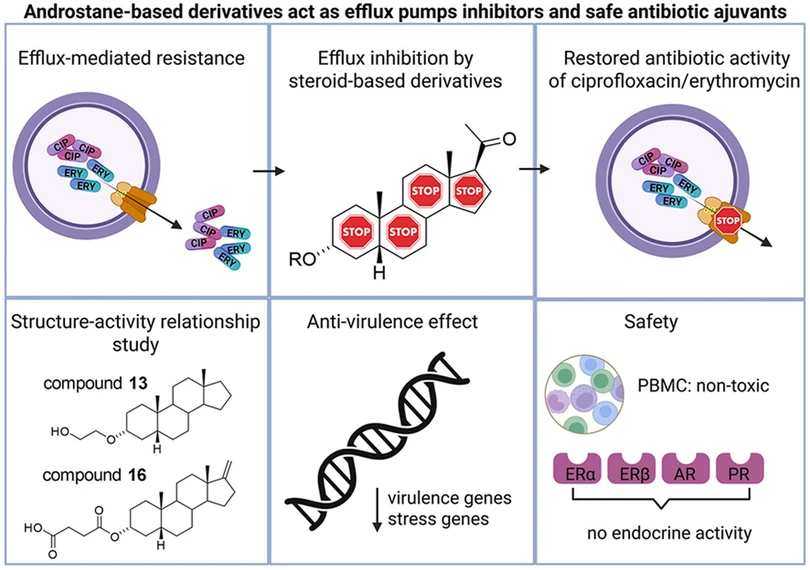
Researchers led by Eva Kudová from IOCB Prague and Jitka Viktorová from UCT Prague have identified new androstane-based steroid derivatives that can significantly improve the effectiveness of existing antibiotics against multidrug-resistant Staphylococcus aureus.
The team screened dozens of natural steroidal hormones and synthetic derivatives to see whether they could block bacterial efflux pumps – mechanisms that bacteria use to eject antibiotics and survive treatment. Two compounds emerged as particularly promising: they inhibited efflux pumps and lowered the effective doses of antibiotics such as ciprofloxacin and erythromycin.
Further analysis showed that one of the compounds also suppressed genes linked to bacterial virulence. Another key finding is that the most active molecules are non-toxic to human immune cells and showed no detectable endocrine activity, suggesting a favorable safety profile.
These findings support the idea that rationally designed steroid-based molecules could act as antibiotic adjuvants, helping existing drugs overcome bacterial resistance.
Read the paper
- Brdová, D.; Křížkovská, B.; Špaček, J.; Míchal, Z.; Jablonská, E.; Strnad, O.; Chodounská, H.; Szánti-Pintér, E.; Morozovová, M.; Hanžl, V.; Tkadlec, J.; Riool, M.; Lipov, J.; Viktorová, J.; Kudová, E. Steroidal hormones and neurosteroids - novel therapeutic strategies in bacterial infections: Design, synthesis, and biological evaluation. Eur. J. Med. Chem. 2026, 308, 118716. https://doi.org/10.1016/j.ejmech.2026.118716