


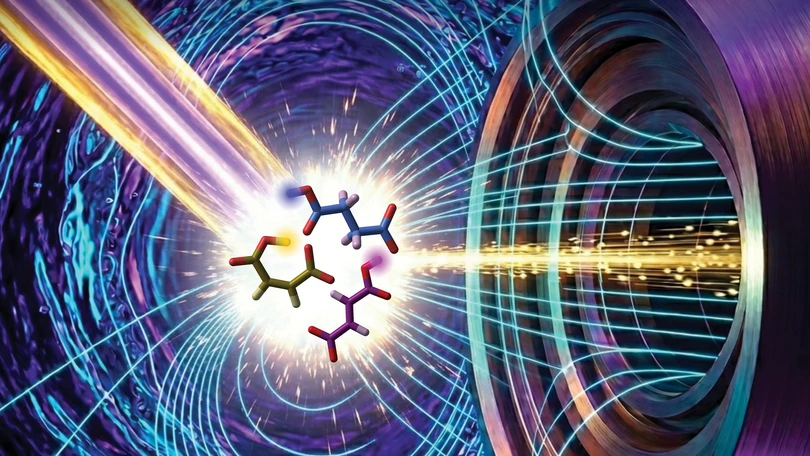
Protons play a central role in many chemical reactions in living organisms. In some cases, a proton may be shared between two nearby molecular groups rather than being localized on just one. This phenomenon can strongly influence the properties and reactivity of biomolecules and is important for enzyme function.
Researchers led by Hanns Christian Schewe (IOCB Prague and Heyrovský Institute of the CAS) together with Lukáš Tomaník (UCT Prague and Fritz Haber Institute of the Max Planck Society) have now investigated proton sharing in a range of biologically relevant polycarboxylic acids dissolved in water, including several molecules related to the citric acid cycle (Krebs cycle).
Using liquid-jet X-ray photoelectron spectroscopy (LJ-PES), a technique that reveals the chemical environment of atoms in molecules dissolved in water, the team was able to probe the position of protons on an ultrafast time scale. Unlike techniques such as NMR, which provide a time-averaged picture, photoelectron spectroscopy captures the instantaneous distribution of protons and can therefore distinguish more directly between localized and shared states.
The results showed significant proton sharing only in maleic acid dissolved in water. In contrast, protons remained mostly localized at individual carboxylic groups in succinic acid, fumaric acid, malic acid, glutaric acid and citric acid. This suggests that proton sharing is not a common feature of these molecules when they are freely dissolved in water.
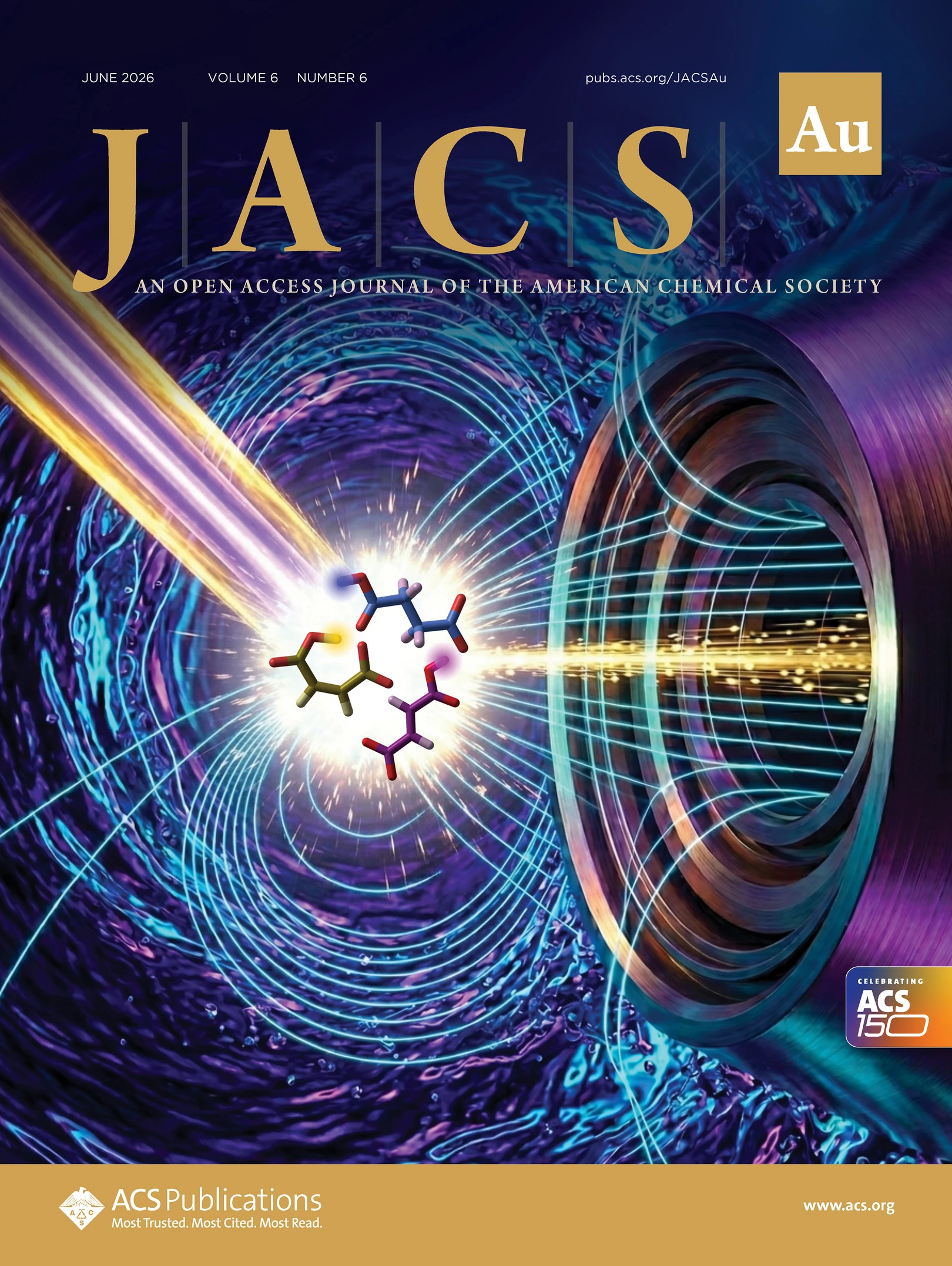
The difference appears to be largely controlled by molecular geometry. In maleic acid, the two carboxylic groups are held close together, creating favorable conditions for proton sharing. More flexible molecules can adopt conformations in which the groups are farther apart, while water molecules form strong hydrogen bonds with them and favor localized protons.
However, the situation may be different inside proteins. When a carboxylic acid binds in the active site of an enzyme, its shape and position can be tightly constrained. Such an environment could bring the relevant groups close enough together to promote proton sharing and thereby influence enzymatic reactions.
The study highlights an important distinction: proton sharing may be rare in freely hydrated molecules but could still become important when biomolecules are held in the right geometry by enzymes. It also demonstrates that LJ-PES is a powerful tool for studying proton behavior in solutions. Its ultrafast and site-specific sensitivity could in future help researchers investigate proton sharing directly in more complex chemical and biological systems.
Read the paper
- Tomaník, L.; Tůma, J.; Öhrwall, G.; Golnak, R.; Le Nguyen, N. L.; Credidio, B.; Kaur, H.; Slavíček, P.; Winter, B.; Schewe, H. C. Proton Sharing in Polycarboxylic Acids in Aqueous Solution. JACS Au 2026, 6 (6), 3349–3355. https://doi.org/10.1021/jacsau.6c00377