From daily pills to one injection a year. HIV prevention pioneers visit IOCB Prague

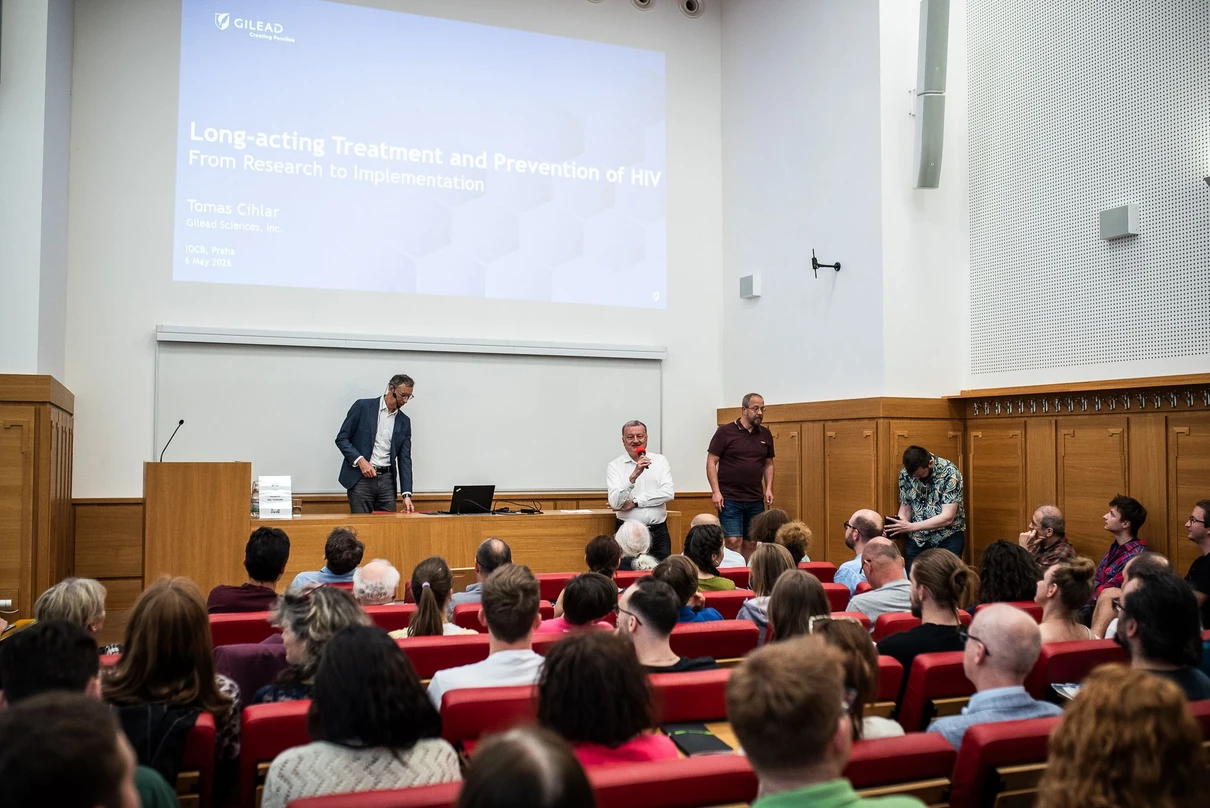
Dr. Tomáš Cihlář, Senior Vice President of Research, Virology at Gilead Sciences, and Dr. Jeffrey Birnbaum, an American pediatrician who has long worked with young Americans at risk of HIV infection or living with the virus, visited IOCB Prague for a joint lecture. The event focused on the future of long-acting HIV prevention and treatment.
Modern HIV treatment is shifting from daily medication to long-acting prevention. This was the central theme of the joint lecture titled HIV Treatment – From Bench to Clinical Practice. “HIV is by no means just a medical problem, but also a social, economic, psychological, and legal one,” said Institute Director Prof. Jan Konvalinka in his opening remarks.
In 2022, Gilead Sciences’ drug lenacapavir was launched on the U.S. market. The company has a long-standing collaboration with OICB Prague, for example on tenofovir – a substance that became the basis for modern HIV drugs.
“During the development of lenacapavir, we broke all the rules we’re supposed to follow when searching for new drugs,” said Dr. Tomáš Cihlář in his lecture, describing the creation of the drug that targets the virus’s protein envelope. Today, it is used not only for treatment but also for preventing infection. Its development took several decades. “Around 2010, we even wanted to give up, but then a new candidate molecule emerged,” concluded Tomáš Cihlář, recounting the story of the drug’s development.

The FDA and the European Commission approved the preventive use of lenacapavir in 2025, but research continues. The ongoing international clinical trial PURPOSE 365 is investigating whether the drug can be administered just once a year instead of the currently approved two injections.
Dr. Jeffrey Birnbaum shared his experiences from daily hospital practice at SUNY Downstate Health Sciences University in Brooklyn. In his practice, he primarily sees young people from the transgender community, for whom a long-acting preventive injection is a particularly attractive option. “Patients don’t have to worry that someone will discover their medication. There’s also no risk of forgetting to take it, and they avoid pill fatigue, the long-term psychological exhaustion associated with the need to take medication regularly.”
Although lenacapavir represents a significant medical advance, the way the drug reaches people is also crucial. Approximately 400 million people are currently at risk of HIV infection, particularly in sub-Saharan Africa. Although Gilead Sciences has six manufacturing partners on the African continent, current U.S. government cuts to HIV prevention funding are dramatically affecting the availability of HIV prevention programs.