If you are defending your PhD towards the end of the year, wait till January, says stem cell researcher Agnete Kirkeby at IOCB Prague
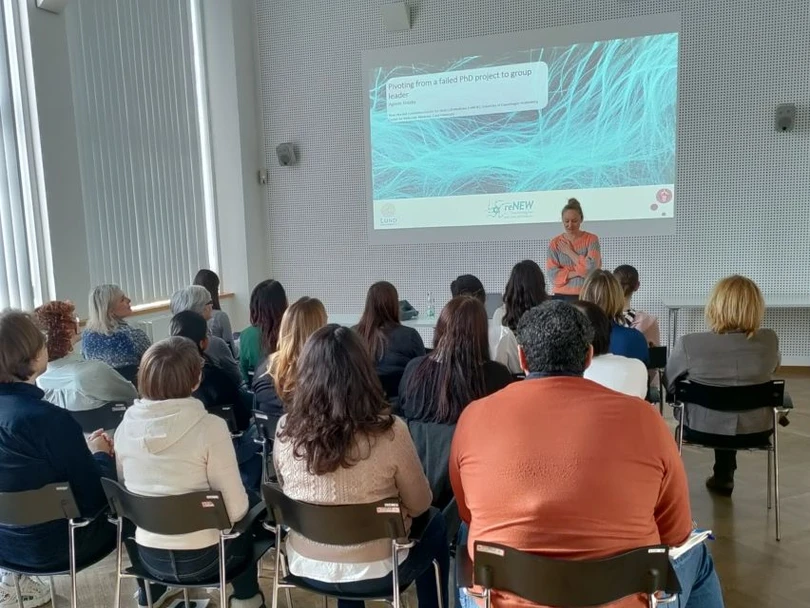
As part of the Dana Hocková lecture series organized by Women in Science at IOCB Prague, the institute welcomed Dr. Agnete Kirkeby from the University of Copenhagen and the Novo Nordisk Foundation Center for Stem Cell Medicine during her visit to Prague for the T-GATE collaborative project symposium.
In her scientific lecture, titled “Application of human stem cell-derived neurons for transplantation and drug development,” she presented her long-standing research on generating dopaminergic neurons from human pluripotent stem cells. These lab-grown neurons are being developed for transplantation therapies aimed at treating Parkinson’s disease and potentially other neurodegenerative disorders.
The talk also addressed the demanding translational pathway from discovery-stage research to clinical trials, offering a realistic perspective on the scientific, regulatory, and logistical challenges involved in bringing a cell-based therapy to patients.
From a failed PhD project to leading a research group
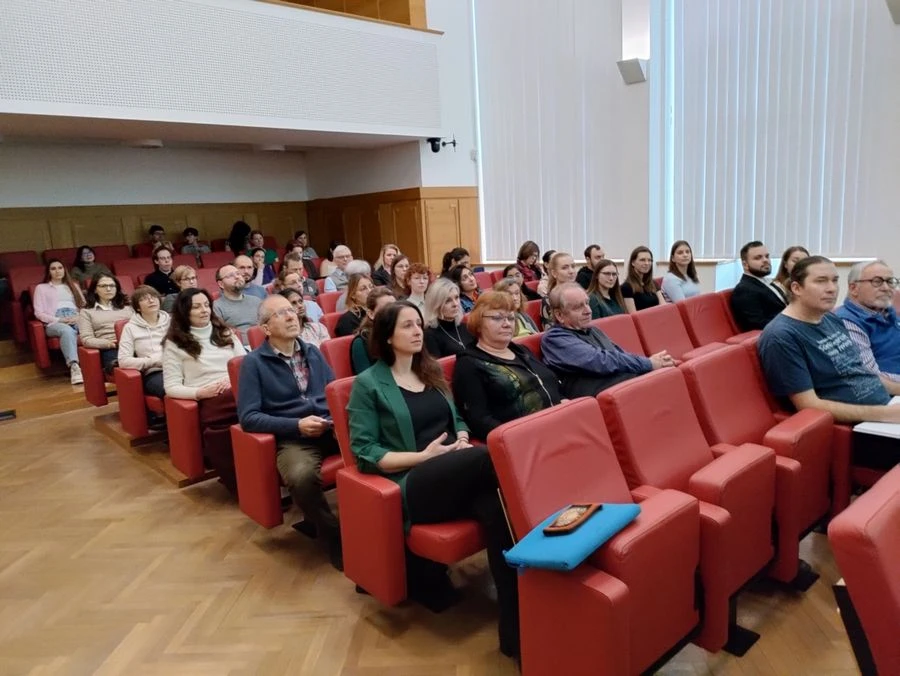
The lecture was followed by a career seminar, titled “How to pivot from a failed PhD project to a group leader.” Dr. Kirkeby spoke openly about the nonlinear nature of academic careers, emphasizing that setbacks, such as an initially unsuccessful PhD project, can be transformed into valuable learning experiences.
She highlighted the importance of persistence, drawing on her own experience of repeatedly approaching her future supervisor abroad in order to gain international experience, securing small grants early on, and gradually building leadership skills through involvement in collaborative projects.
The seminar also emphasized the need for accessible mentorship, strong international networks, and the courage to seek advice. Reflecting on leadership as a transition from individual contributor to team builder, Agnete Kirkeby discussed managing conflict through soft power and fostering a collaborative lab culture built on complementary expertise, an area she found herself very skilled in.
Balancing academic leadership and family life
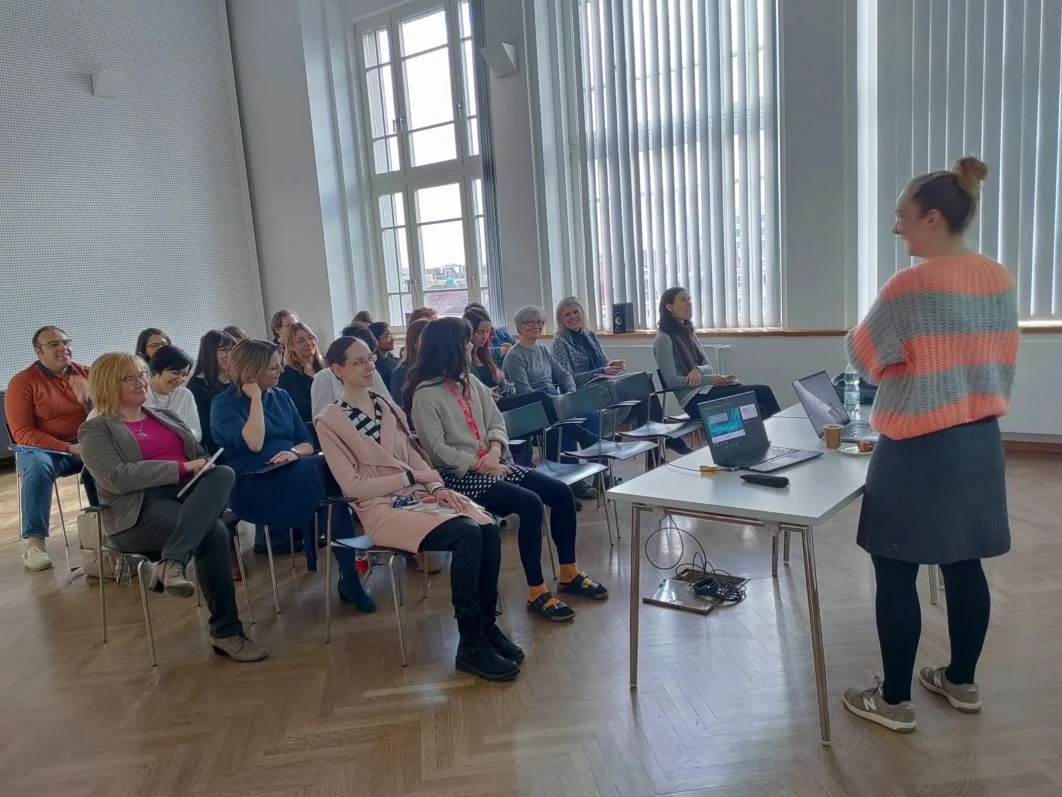
Another part of the discussion also focused on balancing academic leadership with family life. Topics included parental leave, funding structures, and the realities of commuting and career interruptions, noting the importance of grant schemes that acknowledge career breaks, such as those offered by the ERC.
Dr. Kirkeby shared both practical advice, for example, defending a PhD in January rather than December in order to extend ERC eligibility, and personal priorities, including her commitment to having dinner with her children each evening before returning to work later if needed.
Her visit was insightful, candid, and inspiring, offering both scientific excellence and a human perspective on building a career in academia.
T-GATE collaboration and metabolic signaling research
Following the lecture and seminar, Dr. Kirkeby and colleagues from the University of Copenhagen, Aarhus University, the National Institute of Health and Medical Research in Lille, and IOCB Prague took part in the T-GATE project meeting. T-GATE is an initiative supported by the Novo Nordisk Foundation and its Open Discovery Innovation Network (ODIN).
Among its partners is Lenka Maletínská’s research group, Pathophysiological Mechanisms of Food Intake Regulation, at IOCB Prague. The collaborative project focuses on the role of tanycytes in regulating metabolic signaling at the blood–brain interface.
A central topic of the meeting was metabolic peptide permeability, particularly the role of tanycytes as selective gatekeepers controlling the access of circulating hormones and peptides to hypothalamic circuits. In this context, Dr. Kirkeby’s human iPSC-derived hypothalamic models represent a particularly valuable platform, offering a unique opportunity to dissect the cellular and molecular mechanisms governing peptide transport and barrier dynamics in a human system.
The discussion highlighted growing evidence that tanycytes may serve as an active gateway for the uptake of regulatory peptides, with important implications for improving brain accessibility and the therapeutic potential of lipidized anorexigenic peptide analogs developed by the Lenka Maletínská group.